Choose Stable Shoes for Gym Training
Choose Stable Shoes for Gym Training
Choose Stable Shoes for Gym Training
If you're picking out gym training shoes on hubbuycnspreadsheet.org, the real question isn't "which pair looks the most professional" but whether the shoes can provide enough stable support during your training movements.
This guide is for buyers who need to compare strength training, machine training, warm-ups, and general fitness needs. After reading, you can narrow down options based on sole platform, heel lock, upper wrap, and training plan. It's not meant as medical advice, and you shouldn't place an order without checking the product page for size, material, stock, and return/exchange conditions.
Verification date for this article: September 17, 2026. Prices, stock, sizes, materials, seller info, shipping, taxes, logistics routes, and return/exchange conditions may change, so always refer to the information shown on hubbuycnspreadsheet.org on the day you check. 🧭
First Distinguish Between Strength Training and General Fitness Tasks
There's no single answer for training shoes that works for every sport. You should first determine the most common movements in your training, then decide on the priority of stability, cushioning, and flexibility.
Strength training typically values a stable sole contact surface, evenness of the forefoot and heel, and whether the heel moves easily during squats and force production. Especially for squats, deadlifts, leg presses, and standing presses, a sole that's too soft or overly flexible may make your footing feel less secure.
General fitness may also include jumps, short runs, rowing, kettlebells, and dynamic warm-ups. These tasks require some cushioning and flex, not just "the harder the better." If the sole platform is wide but the shoe body is stiff and the upper presses on your toes, comfort during dynamic movements may decrease.
You can start by sorting with the following approach:
Focus on strength training like squats and deadlifts: prioritize flat sole, lateral support, and heel lock.
Focus on machines and light training: balance stability with everyday comfort.
Focus on jumps, short runs, and circuit training: on the basis of stability, check cushioning, weight, and flexibility.
Training content varies greatly: don't just look at marketing words; compare sole structure, upper fixation, and specific size info.
What Evidence to Look for First on hubbuycn Product Pages
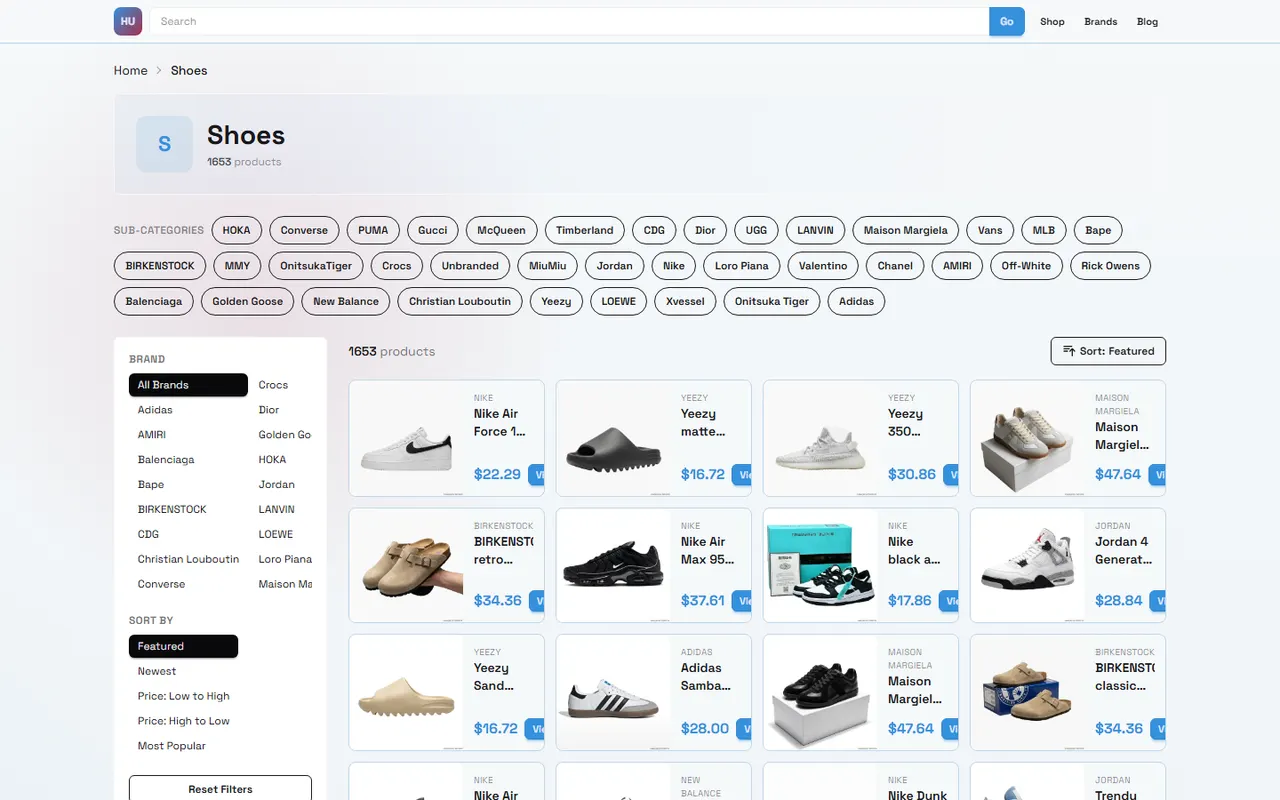
After searching for products on hubbuycnspreadsheet.org, first check whether the page has enough visible information for comparison. The more complete the product name, sole images, size chart, material description, seller info, and stock status, the better it is for your candidate list.
Don't judge the stability of the sole based only on the main image. The main image may only show the appearance and can't tell you about sole hardness, contact surface width, or heel structure. Prioritize looking for side, bottom, heel, and ankle collar images, and check whether the product description clearly states the sole material, closure method, and intended use.
You can verify the product page information in this order:
Is the product name clear? Is it indeed a training shoe or a shoe suitable for your target training?
What units does the size chart use? Does it provide a foot length or insole length reference?
Are the sole and upper materials clearly described? Don't mistake color or appearance descriptions for functional evidence.
Can the product images clearly show the sole outline, heel height, laces, or other fixation structures?
Are price, stock, seller, shipping, and return/exchange conditions visible on the current page? Record the verification date.
After ordering, can you use the platform's current process to view order status, warehouse status, QC photos, consolidation, and logistics tracking?
If the page lacks key images or size data, mark it as "needs verification" rather than filling in with similar styles or other sellers' information. 📋
Check the Width and Flatness of the Sole Platform
The sole platform is the foundation of contact between your foot and the ground. The point here isn't simply to find the widest shoe, but to observe whether the sole can provide clear, balanced support in the main directions of force.
First, look at the sole outline. A bottom that's excessively narrow, with the forefoot and heel visibly overhanging, or a deep arch in the middle, may reduce effective contact area. On the other hand, a moderately wide sole with clear edges usually makes it easier for buyers to judge the lateral support range.
Then, check if the sole is flat. Training shoes can have tread patterns, sections, or slight curves, but you can't equate complex tread with stability. Look at both side and bottom views:
Does the heel have a clear, continuous landing zone?
Is the forefoot excessively upturned, reducing contact area when standing?
Is the sole edge wider than the upper, providing visible lateral support?
Does the midsole look too thick, too soft, or clearly leaning toward a running shoe structure?
Will the bottom sections cause uneven support under load?
If the product page doesn't have an actual bottom view, don't infer platform stability from brand name, colorway, or words like "non-slip." Non-slip mainly relates to friction with the ground and doesn't automatically prove that the sole width, hardness, or lateral support is suitable.
Assess Heel Lock and Upper Wrap
Lateral instability isn't just from the sole; it can also come from the heel slipping inside the shoe. The goal of heel lock is to keep the foot relatively stable during squats, strides, and turns without causing significant pressure or numbness.
When viewing the product page, pay attention to the heel cup, collar height, lacing system, and upper sections. If the heel area has a clear wrap structure and the lace holes are distributed to cover the instep, it's usually easier to adjust individually than styles with only a loose elastic collar. But images only support a preliminary judgment; they can't replace trying on.
Before ordering, check:
Can the laces, Velcro, or other closure methods be adjusted independently?
Does the collar look too high or stiff, potentially rubbing the ankle?
Does the heel area show obvious collapse, excessive softness, or structural incompleteness?
Is there enough room in the upper for toes to splay naturally?
Does the size chart provide foot length data instead of just vague generic sizes?
When choosing a size, measure your foot length and convert according to the units on the product page. Different sellers may have different fits, so don't assume the same size works across all products just because you normally wear that size. 👟
Compare Support Needs for Squats, Machines, and Warm-Ups
Final comparison should be based on movements, not product labels. The table below can help translate your training tasks into product page checks.
Training Task | Evidence to Check First | Situations to Beware |
|---|---|---|
Squats, deadlifts | Flat sole, stable heel, sole edge support | Sole too soft, heel slipping, forefoot clearly upturned |
Leg press, machine training | Heel contact, upper wrap, toe space | Too loose inside or single fixation method |
Standing press, lunges | Lateral support, sole contact area, upper adjustability | Sole too narrow, heel shifts when turning |
Jumps, short runs, warm-ups | Moderate cushioning, flexibility, weight, comfort | Sole too hard, too heavy, or uncomfortable on landing |
If your training plan includes both heavy strength and lots of jumps, you may need to compromise between stability and dynamic comfort. Don't sacrifice other training aspects for one movement, and don't describe one shoe as suitable for all scenarios.
You can rank the three most common types of movements by proportion. For example, if strength training dominates, prioritize sole platform and heel lock; if classes focus on jumps and running, also consider cushioning, flexibility, and shoe weight. This judgment comes from your training plan, not from the product title.
Which Marketing Words Cannot Be Equated with Stability
Common expressions on product pages like "non-slip," "support," "professional training," and "stable structure" are just clues for further verification, not conclusions.
"Non-slip" doesn't mean suitable for squats. It may only indicate sole tread or friction design, not lateral support under load.
"Lightweight" doesn't mean flexible. A shoe can be light but still unsuitable for dynamic movements due to midsole structure or upper material.
"Thicker" doesn't mean better cushioning or more stability. A thicker midsole may raise the foot height, changing the standing feel and movement feedback.
"Professional" or "fitness-specific" also can't replace structural evidence. You still need to check the sole, heel, closure, size, and after-sales conditions.
For attributes that can't be confirmed from page images and text, mark them as unknown. Don't infer sole hardness, real feel, or durability from review counts, blurry user photos, or information from adjacent products.
Pre-Order Verification Checklist for Training Shoes
Before placing an order on hubbuycnspreadsheet.org, go through these checks one by one:
You have identified your main training type and most common movements.
You have confirmed the product name is relevant to your training use.
You have viewed side and bottom images of the sole and can get a preliminary idea of the platform outline.
You have checked the heel structure, collar, and closure method.
You have used the product page's size chart to compare with your foot length, not just your usual size.
You have recorded the verification date for price, stock, materials, seller, and related fees.
You have confirmed whether the page provides current processes for orders, warehouse viewing, QC photos, consolidation, logistics tracking, and after-sales.
If you need to view QC photos, first confirm they correspond to your order and check the sole, upper, heel, size label, and obvious defects.
When displaying or saving orders, waybills, and payment info, cover name, address, phone, order number, and payment details.
For attributes you can't confirm, keep doubts and don't substitute information from other products or sellers.
QC photos can help you check visible appearance and order correspondence, but they can't fully prove sole hardness, wearing comfort, or long-term durability. If you find discrepancies in size, color, structure, or obvious defects, handle them within the platform's after-sales window and retain necessary records. 🔍
Make the Final Choice Based on Your Training Plan
After comparison, choose the shoe that best matches your training plan and has the most complete page evidence. If you mainly do squats, deadlifts, and machine training, prioritize styles with a clear sole platform, heel that doesn't move easily, and adjustable upper; if your general training involves a high proportion of jumps and running, add checks for cushioning, flexibility, and weight on top of stability.
This selection method saves not a fixed amount of money, but reduces the cost of returns, exchanges, and repeat purchases caused by wrong size, mismatched use, or insufficient page information. It may increase the time you spend comparing before ordering, and it can't eliminate risks of fit differences, shipping damage, or actual feel not matching.
This method is suitable for buyers who want to choose based on training movements, are willing to verify product page evidence, and can check visible issues during warehouse QC. It's not recommended if you only need a casual everyday shoe, can't get enough product information, or have foot and joint issues that require professional assessment during training.
Finally, put your training plan, product page evidence, size verification, and QC checks on the same decision chain before deciding to order. Stability isn't a marketing word; it's the result of the sole, heel, upper, size, and specific movements working together.
Agent Platform Shopping FAQ
1. What is the best way to locate a product I want to buy on hubbuycnspreadsheet.org?
On hubbuycnspreadsheet.org you can enter a single keyword into the search box or visit the category section, where items are also sorted by brand. Shorter search phrases usually produce more results but are less specific, while longer phrases give fewer, more accurate matches. For instance, try searching for "Air Force 1 White," "sneakers," or just "Air Force 1."
2. Can you explain what QC photos are on hubbuycnspreadsheet.org?
Every drop-shipping platform, including hubbuycnspreadsheet.org, employs a specialized quality control team. After your goods reach the warehouse, the team carries out an inspection and captures QC photographs. Typically, three pictures are taken, and the staff checks that the color, size, specifications, and quantity match your order, while also looking for any defects. This does not apply to electronics, where only the outer casing is checked. If a problem such as incorrect size, color, or quality is found, the team immediately asks the seller for a return. This process helps guarantee that the items you receive are of good quality.
3. How do I view my QC photos on hubbuycnspreadsheet.org?
When you review QC photos on hubbuycnspreadsheet.org, pay attention to the specific details of your purchased item. For shoes, look closely at the toe, heel, and tongue to evaluate stitching, overall shape, and tongue thickness to judge the quality. For clothing, examine the collar label, logo embroidery, fabric, and the neatness of the collar and cuffs, among other details.
4. How can I determine if a product on hubbuycnspreadsheet.org is of good quality?
To judge product quality, always use the QC photos rather than factory images, which are often edited. The QC photos help you verify whether the item meets your specific detail requirements before you decide to buy. Also, be cautious about extremely low-priced items, as they are generally not of good quality.
Browse our latest products and find your next favorite item.